
We highly recommend to have a one-to-one direct connection from the sensors to the server, but in some cases, the network and site constraint make it not possible.
Here are some guidance for more complex networking topology. Please note that using more complex networking configuration sometimes requires advanced networking skills.
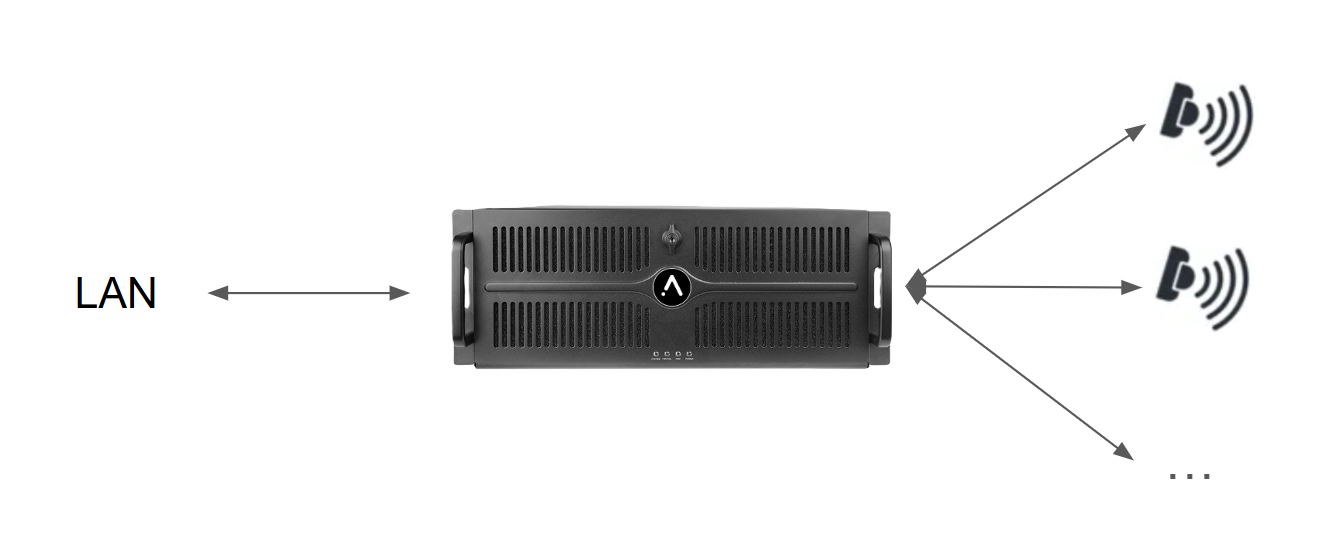
Usual reasons
- It’s not physically possible to install one cable per sensor
- There is more than one sensor per port (when possible, see )
- Cables are more than 90m long between the sensor and server (RJ45 limitation)
One to three sensors on a single port
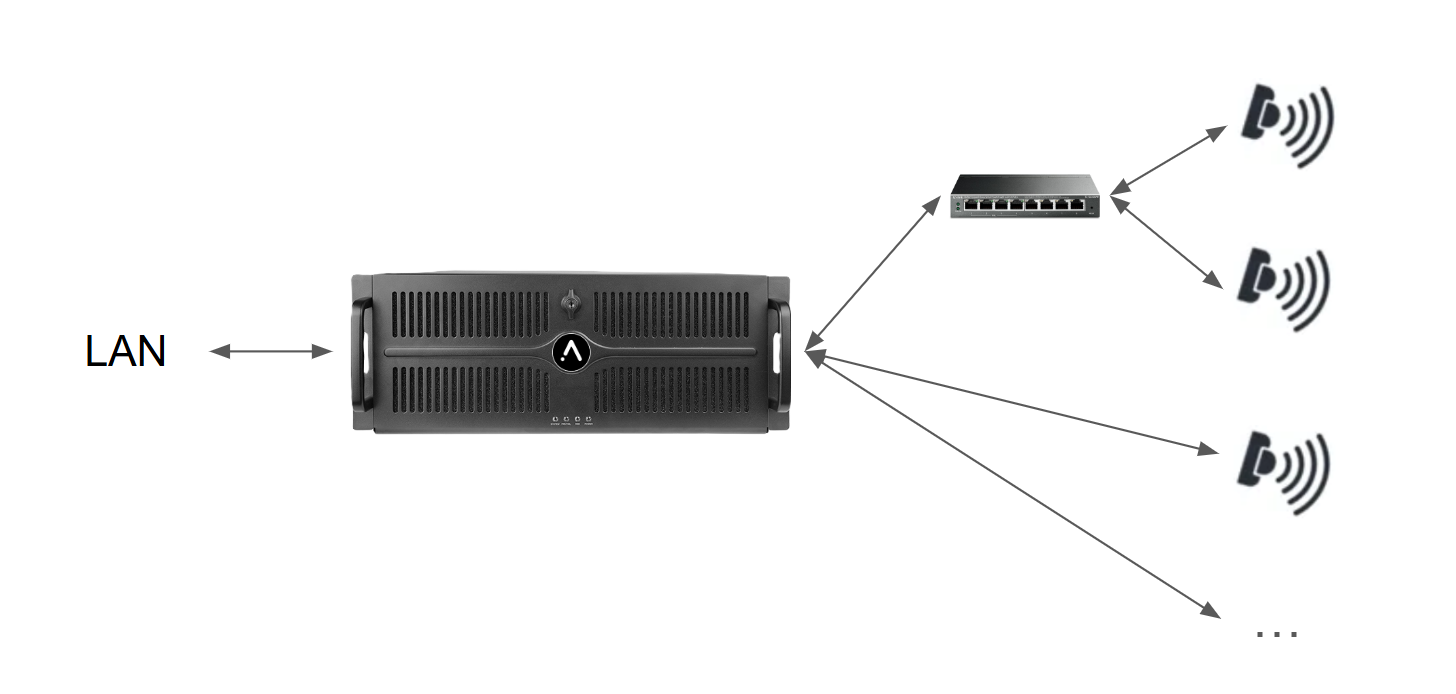
For wiring up two until three 2D LiDARs on a single port, it’s possible to use a 1Gb standard switch.
Note that to keep the POE capability you will need to have a POE switch or a POE injector if the sensors are not directly plugged to the server
Don’t connect several 3D camera on a single port, if you have any doubt, please contact us.
Advanced
A single cable between the sensors room and the server room
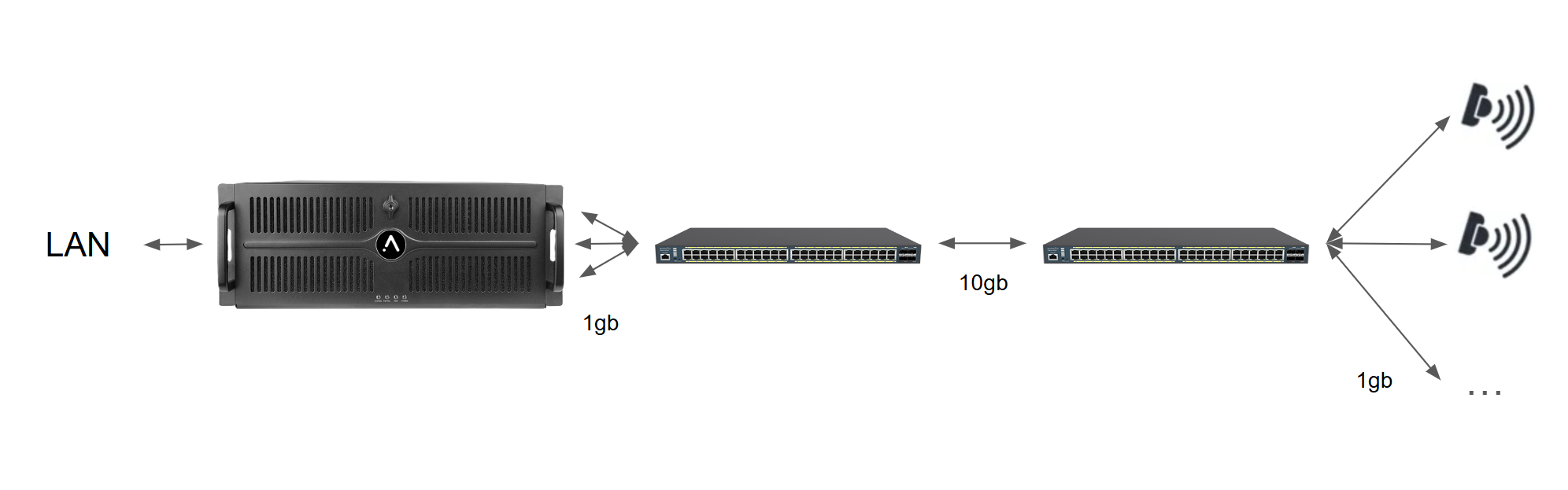
When needing to put only one cable between the server and the sensors, for high bandwidth sensors (3D cameras), the switch needs to be chosen carefully for their bandwidth per port and backbone possibility.
Each 3D camera should be allocated a 1gb bandwidth from the sensors to the server, and being connected to its dedicated port to the server.
2D LiDARs have generally a low bandwith, so standard 1Gb equipment might be enough for less than 8 LiDARs
When using a single cable, always compute the bandwith for each configuration.
Ensure that you use the correct cable specification for 10gbits connections
Always check and test that all data are forwarded correctly with the correct bandwidth and latency
More than 90m distance
For a distance above 90m, RJ45 cables might not be relevant anymore. It might be considered switching to fiber. The requirements for bandwidth and network do apply as well.